

A practical guide to batches, processing fees, refunds, tips, chargebacks and settlement timing
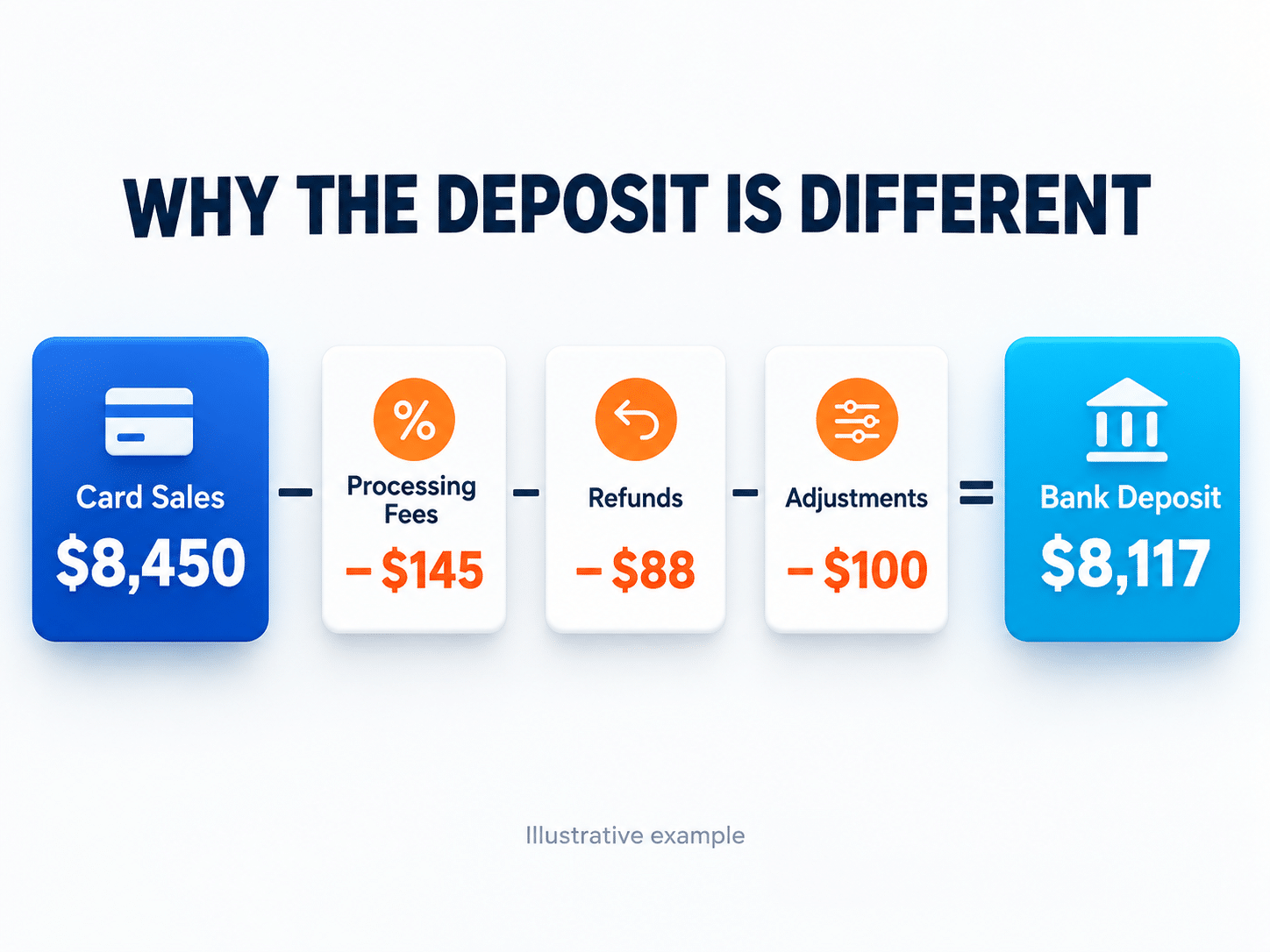
You close the register at the end of the night and see $8,450 in card sales. A day or two later, the deposit in your bank account is only $8,117. Is money missing?
Probably not. A credit card sales report and a bank deposit measure two different stages of the payment process. The total shown in your point-of-sale system reflects transactions recorded during a particular reporting period. Your deposit reflects the transactions included in a settled batch, adjusted according to your processor’s funding schedule and fee structure.
Understanding that difference can save hours of bookkeeping and help you spot genuine problems faster.
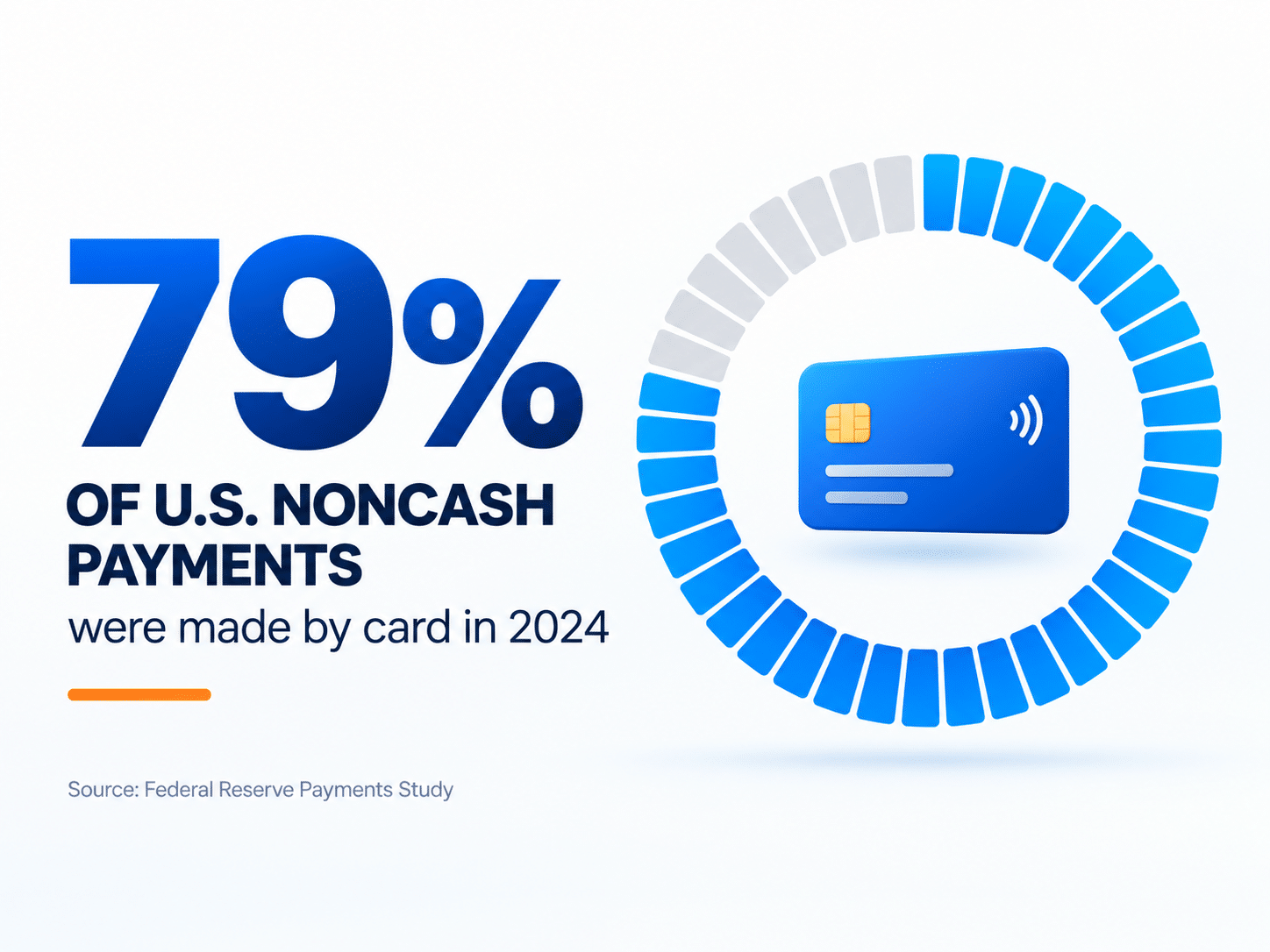
This matters more than ever as card payments continue to dominate commerce. According to the Federal Reserve’s 2025 Payments Study, cards accounted for 79% of all U.S. noncash payments by number in 2024. The Federal Reserve’s Diary of Consumer Payment Choice also found that credit cards represented 35% of consumer payments in 2024 and debit cards another 30%. comparing a few advertised rates.
For restaurants, retailers, professional offices and service businesses across New York, New Jersey and eastern Connecticut, even a small reconciliation problem can affect a large portion of daily revenue. Here are the most common reasons your deposits and sales reports do not match—and what to do about them.
1. Your Sales Day and Processing Batch May Use Different Cutoff Times
A card transaction does not move directly from the terminal into your bank account. It generally passes through three stages:
- Authorization: The card issuer approves or declines the transaction and may place a hold on the cardholder’s available funds.
- Clearing: The completed transaction is submitted through the payment network.
- Settlement and funding: The transaction is settled and the resulting funds are sent through the acquiring side of the payment system before reaching the merchant’s bank account.
Mastercard describes authorization, clearing and settlement as the three core activities involved in its switching services. The important lesson for a merchant is simple: an approved sale is not yet a completed bank deposit.
Most businesses submit approved transactions together in a batch. If your point-of-sale report covers midnight to midnight but your batch closes at 9:00 p.m., transactions processed between 9:00 p.m. and midnight may appear in the next deposit.
This is especially noticeable at restaurants, bars, convenience stores and other businesses that remain open late. A busy Friday night in Manhattan, Jersey City or Stamford may span two reporting periods even though the staff considers it one shift.
What to check: Compare the exact opening and closing timestamps on the POS sales report with the timestamps on the processor’s batch report. Do not compare deposits with calendar-day sales until you know those periods align.
2. Processing Fees May Be Deducted Before the Deposit
Processors generally handle fees in one of two ways:
- Net funding: Processing fees or other adjustments are deducted before the money reaches your bank account.
- Gross funding: The full settled sales amount is deposited, and processing fees are withdrawn separately—often according to a monthly schedule.
With net funding, a $5,000 settled batch will not necessarily produce a $5,000 deposit. If the applicable fees and adjustments total $145, the deposit may be $4,855.
That does not mean the business lost $145 during settlement. It means the deposit must be reconciled as gross card sales minus the fees and adjustments shown in the processing report.
Merchants can become confused when a processor changes the billing method or when certain charges are deducted daily while others appear monthly. The merchant agreement and processing statement should explain how fees are collected.
What to check: Determine whether your account uses gross or net funding. Then look for a funding or deposit-detail report that itemizes the amount submitted, fees withheld and net amount funded.
3. Tips May Be Added After the Original Authorization
Restaurants, salons and other tipped businesses commonly authorize a card for the initial amount and add the final tip later. That creates several numbers that may appear in different reports:
- The original authorized amount
- The adjusted transaction total after the tip
- The final amount included in the closed batch
If employees have not completed their tip adjustments before the batch closes, those transactions may be delayed, settled incorrectly or moved into a later batch, depending on the system and configuration.
What to check: Confirm that all tips have been entered and that every open check is closed before the end-of-day batch is submitted. Review the final batch total rather than relying only on the earlier authorization report.
4. Refunds and Voids Affect Reports Differently
Although the words are sometimes used interchangeably, a void and a refund are not the same accounting event.
- A void generally cancels a transaction before it settles.
- A refund returns money after the original transaction has been processed.
A voided sale might remain visible in an activity report but be excluded from the settled batch. A refund may reduce a later deposit, even when the original sale occurred days or weeks earlier.
For example, a New Jersey retailer may record $10,000 in new sales today but issue $700 in refunds tied to earlier purchases. Its net settlement activity could therefore begin closer to $9,300 before fees or other adjustments.
What to check: Review separate totals for completed sales, voids and refunds. Make sure your accounting system records a refund against the correct date and original transaction rather than simply reducing today’s sales.
5. Chargebacks and Other Adjustments Can Reduce Funding
A chargeback occurs when a cardholder disputes a transaction and the issuer initiates the dispute process. Depending on the processor and the status of the case, the disputed amount and a related fee may be debited from a merchant deposit or bank account.
That adjustment may have no connection to the sales processed that day. A chargeback involving a transaction from several weeks ago can reduce today’s funding and make the deposit appear short unless the bookkeeper reviews the adjustment detail.
Other adjustments may include reversals, retrieval-related charges, reserve activity or corrections to a previous settlement.
What to check: Review dispute notifications and funding-adjustment reports regularly. Assign responsibility for responding to chargebacks promptly, and reconcile chargeback debits separately from current sales.
6. Weekends and Bank Holidays Shift Deposit Timing
“Next-day funding” usually refers to eligible business days and depends on factors such as batch cutoff time, processor policy, the merchant’s bank and account status.
A batch submitted late Friday may not appear on the same timetable as one submitted Tuesday afternoon. Federal banking holidays can create another shift.
Timing differences can be particularly confusing after a three-day weekend. Several batches might arrive as separate deposits, arrive together or appear one business day later than the merchant normally expects.
What to check: Reconcile deposits by batch number and settlement date—not by assuming every sale will reach the bank on the following calendar day. Keep a holiday calendar available when forecasting cash flow.
7. More Than One Location or Terminal May Be Funding the Same Account
Businesses with multiple terminals, merchant identification numbers or locations can see deposits grouped or separated in unexpected ways.
A restaurant group operating in New York and Connecticut might use one bank account while maintaining separate merchant accounts for each location. The bank description may not clearly identify which store produced each deposit.
The reverse can happen as well: transactions from several terminals may be combined into one batch, making individual terminal reports appear not to match the bank deposit.
What to check: Document every terminal ID and merchant ID, the business location connected to it and the bank account receiving its deposits. Use location-level and consolidated reports consistently.
8. Manually Keyed, Offline or Unsettled Transactions May Need Attention
Some approved transactions do not settle normally. A transaction could remain in an open batch, be stored temporarily during an internet outage, require correction or fail during the settlement process.
Offline acceptance can help a business continue operating during a connectivity problem, but it carries additional risk because final approval may not occur until the transaction is submitted. Businesses should understand their equipment’s offline settings and establish limits rather than assuming every stored transaction is guaranteed to fund.
What to check: Look for open batches, failed settlements, pending transactions and offline transactions after any terminal or internet problem. Never rerun a questionable transaction without first checking its status; doing so can create a duplicate charge.
A Simple Daily Reconciliation Formula
The reconciliation process does not need to be complicated. Start with the total of the transactions that actually entered the settled batch:
Settled card sales
+ final tip adjustments
− refunds and voided transactions included in the period
− chargebacks and other funding adjustments
− fees withheld through net funding
= expected bank deposit
Then match three records:
- The POS or terminal sales report
- The processor’s batch and funding report
- The corresponding bank deposit
The batch number is usually a better matching tool than the sales date alone.
A Five-Minute Deposit Checklist
When a deposit does not match your sales report, ask:
- Did the POS report and batch report cover the same start and end times?
- Did every terminal and employee close out correctly?
- Were all tips finalized before the batch closed?
- Were refunds, voids or chargebacks deducted?
- Does the account use gross funding or net funding?
- Did a weekend or bank holiday affect the funding date?
- Are multiple locations or merchant accounts funding the same bank account?
- Are any transactions still pending, offline or sitting in an open batch?
If those items still do not explain the difference, contact your processor with the batch number, settlement date, expected amount and actual deposit amount. Specific information will make the investigation much faster.
Clearer Reporting Starts With the Right Payment Partner
Payment reporting should help you understand your cash flow—not force you to solve a puzzle every morning. Properly configured equipment, sensible batch times, clear funding reports and responsive support can make reconciliation much easier.
AerPay helps restaurants, retailers and service businesses across New York, New Jersey and eastern Connecticut choose payment solutions that fit the way they actually operate. Whether you need clearer reporting, updated equipment, mobile acceptance, digital invoicing or a better strategy for controlling processing costs, our team can help.
Not sure why your deposits and sales totals keep coming out differently? Contact AerPay for a payment-processing review. We’ll help you identify where the numbers diverge and whether your current setup is working as efficiently as it should.
Sources
- Federal Reserve Board, “Federal Reserve Issues Initial Findings from Its 2025 Triennial Federal Reserve Payments Study,” July 1, 2026.
- Federal Reserve Financial Services, “2025 Findings from the Diary of Consumer Payment Choice.”
- Mastercard, “Mastercard Switching Explained.”
Funding schedules, fees and transaction handling vary by processor, financial institution, account type and merchant circumstances. Merchants should consult their processing agreement and provider for terms specific to their account.